
Have you ever wondered why, in moments of greatest joy, we feel the urge to share it with someone right away? Why does a victory experienced alone leave a feeling of incompleteness? And why does even the most perfect comfort fail to provide the warmth we feel when we simply hold a loved one’s hand?
The modern world offers countless recipes for happiness: from positive psychology to mindfulness retreats, from financial freedom to digital detoxes. The wellness industry has turned into a global market with billions in revenue. And yet, something is missing. Studies show that levels of loneliness and anxiety in developed countries are rising, despite all these tools. Perhaps we’re looking in the wrong place?
Western psychology has made significant contributions to understanding happiness. Martin Seligman described the five components of well-being in the PERMA model, and Daniel Kahneman distinguished between the happiness a person experiences and the happiness they remember. These are extremely valuable discoveries. However, the Korean philosophical tradition offers something different—not a model or a formula, but a holistic view of the nature of happiness, rooted in human relationships. And when we look at this through the lens of simjeong, dimensions open up that we often fail to notice.
The Korean word 행복 [haengbok]—“happiness”—is written with two characters: 幸 [haeng]—luck, a fortunate coincidence—and 福 [bok]—blessing, the fullness of blessings. The very structure of the word implies that happiness is not merely a personal achievement but also a gift we receive through reciprocity. A blessing cannot exist without the one who bestows it. Good fortune does not arise in a vacuum—it is born of encounters, human closeness, and the experience of unity. The very etymology of the word suggests that happiness is not an individual but a mutual phenomenon.
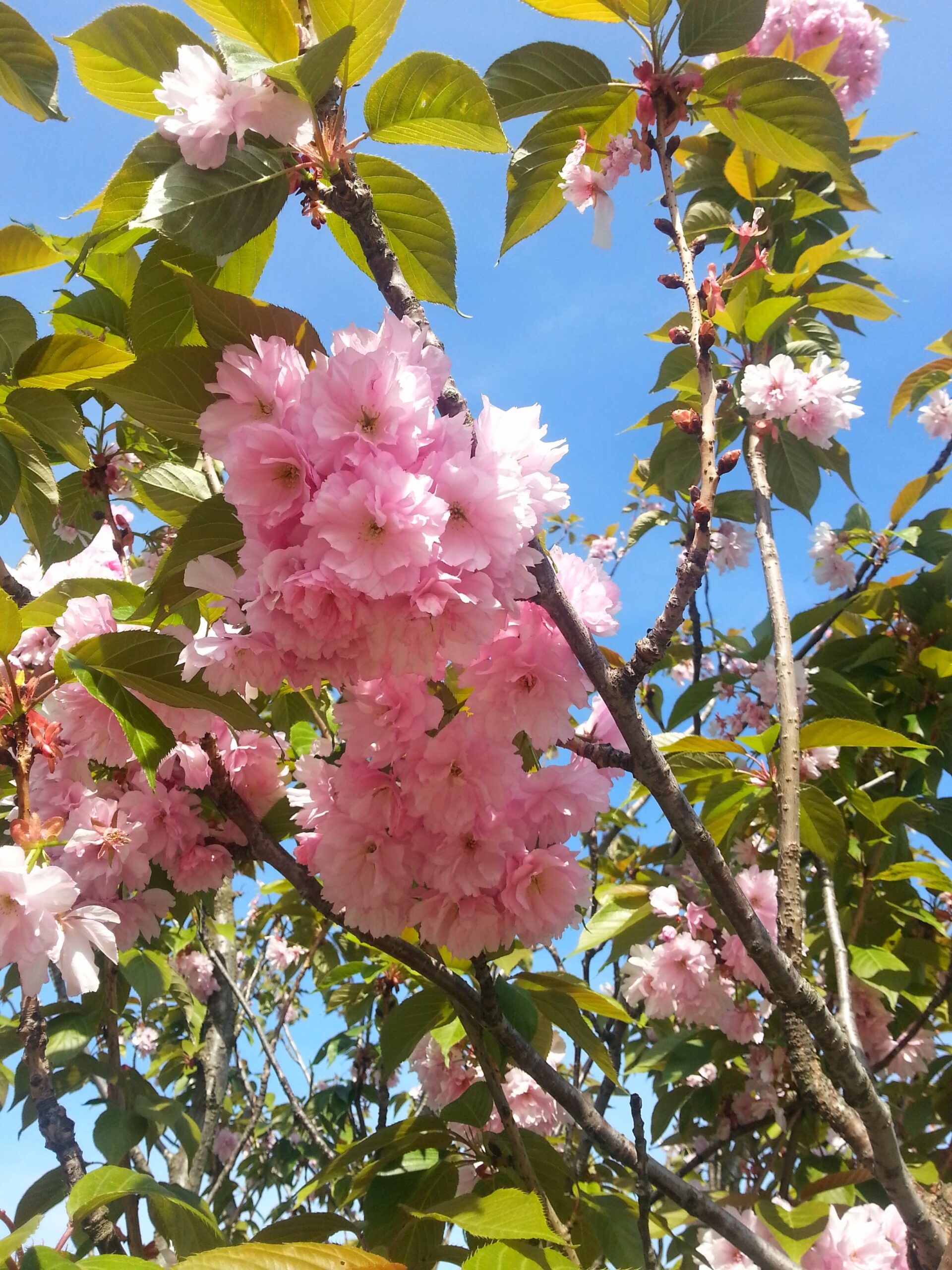
Let’s imagine a tree. On its own, severed from the soil, it turns into dry wood. To live, it needs roots, water, sunlight, air, and interaction with the environment. A tree is not an isolated object, but a network of living connections: with the earth, rain, light, and other trees, whose fallen leaves nourish the soil around them. And only when these connections are in harmony does fruit appear. Fruit is not the tree’s goal, but the result of its full life in mutuality.

The same is true of human happiness. It is a fruit. A fruit on the branch of love, as they say in Korean tradition. Is happiness possible without love? We may have money, health, and recognition, but if there is no one to say, “I am glad you are here,” that wealth loses its meaning. Happiness is born not within an isolated “I,” but in the space between “I” and “you.” In what Shimjeon calls emotional resonance—the heart’s ability to respond to another person’s heart.
This idea is not new. Ukrainian culture also possesses a deep intuitive understanding of this principle. In the 18th century, Hryhorii Skovoroda wrote about “natural labor”—an activity that corresponds to a person’s inner nature. But at the same time, he emphasized: true joy is born not in solitary self-knowledge, but in connection with other people. His idea—“happy is the one who has united the personal with the common”—resonates remarkably with the Korean understanding of hyeongbok.
In Aristotle, we find the idea of eudaimonia—happiness as human flourishing, impossible without community, friendship, and life among people. The West and the East, separated by centuries and thousands of kilometers, arrive at a similar conclusion: happiness is a shared endeavor.
And here another important dimension opens up. The philosophy of simjeong is not merely a poetic image but an approach that can be applied in psychology, education, and therapy. When we say that happiness is born in relationships, it is not just a beautiful metaphor. It can be explored, understood, and put into practice.
This approach paves the way for a culturally sensitive psychology—one that respects the depth of human experience and does not reduce it to mere metrics. When a psychologist understands that for a person, happiness is not simply a balance of positive and negative emotions, but a sense of unity with loved ones, the very approach to helping changes. Then health emerges not merely as the absence of illness, but as the fullness of human connections.
A person’s striving for peace and happiness is realized where unity appears: unity of soul and body, reciprocity in marriage, support within the family, and a sense of community with others. As long as there is no true unity among loved ones, happiness remains fragile and incomplete.
But this is not a verdict; it is an invitation. An invitation to build happiness not as a personal project, but as a shared journey. Happiness is not a destination, but a way of being together. A person whose heart is filled with love naturally shares it with others. And perhaps that is why the first step toward henbok is not the search for something new, but a return to someone close. To a heart that awaits our own.